

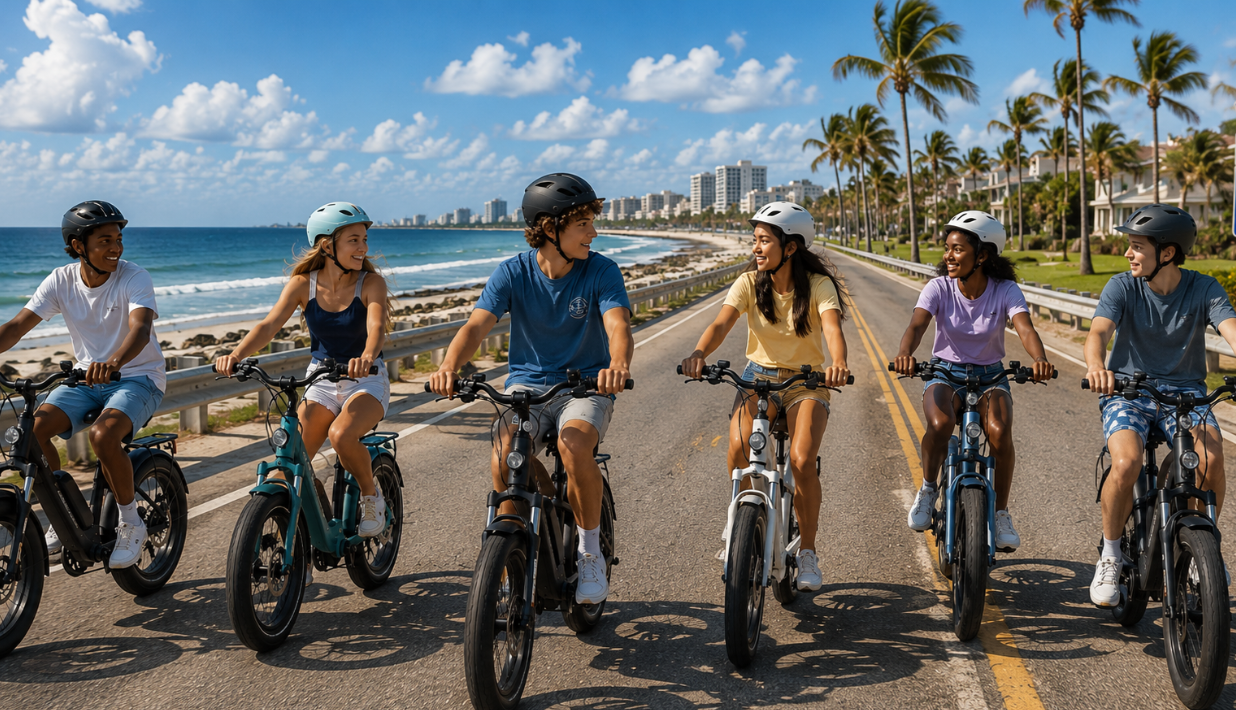
If you live in Northeast Florida, you’ve probably noticed the explosion in e-bike popularity over the last few years. They’re everywhere in communities like Nocatee, Ponte Vedra, Jacksonville Beach, Atlantic Beach, and throughout St. Johns County. For many families, they’ve become a practical and fun way for kids and teens to get around, whether that’s riding to a friend’s house, heading to a neighborhood amenity center, or simply enjoying a little more independence.
As both an insurance agent and a parent, I understand the appeal. Most conversations about e-bikes focus on safety, including helmets, traffic rules, and rider awareness. Those are important discussions to have. What often gets overlooked, however, is the liability exposure that can come with these bikes and the financial consequences that may follow a serious accident.
A recent case involving a fatal e-bike accident made national headlines when criminal charges were filed against the rider’s mother. The specific facts of that case are unique, and every situation is different. What caught my attention was the broader reminder that parents can face significant legal and financial consequences when a child causes serious injury to another person.
Most families purchasing an e-bike are thinking about convenience, recreation, and freedom. They are not thinking about lawsuits, liability claims, or whether their insurance would respond if someone were seriously injured. Unfortunately, those are exactly the questions that arise after an accident occurs.
The Insurance Question Many Families Never Ask
When a teenager gets behind the wheel of a car, most parents understand there is risk involved. There are licensing requirements, insurance requirements, and years of public education focused on safe driving. E-bikes have become popular much more quickly, and many families have never had a similar conversation about responsibility and liability.
If your child accidentally injures a pedestrian, causes another cyclist to crash, or collides with a golf cart, who pays for the damages? Would your homeowners insurance respond? Would your liability limits be sufficient if the injured person filed a lawsuit? Would an umbrella policy provide additional protection?
These aren’t questions most people ask when they purchase an e-bike, but they are important questions to understand before a loss occurs.
Florida Law and Insurance Don’t Always Agree
One area that creates confusion is that Florida law and insurance policies don’t necessarily view e-bikes the same way.
Under Florida law, most Class 1, Class 2, and Class 3 e-bikes are generally treated as bicycles rather than motor vehicles. That’s why many people assume their homeowners policy will automatically cover any liability arising from an e-bike accident.
Unfortunately, insurance policies don’t always follow the same definitions found in Florida traffic laws.
Many homeowners policies define a motor vehicle as any self-propelled land vehicle. Depending on the policy language and the circumstances of the loss, an e-bike may fall within a motor vehicle exclusion even though Florida law classifies it as a bicycle.
In other words, just because an e-bike is legal to operate like a bicycle does not automatically mean a homeowners policy will respond the way you expect after an accident.
This is one of the reasons we encourage clients to review coverage before assuming they are protected.
Not All E-Bikes Are Created Equal
Not every e-bike presents the same level of risk.
A Class 1 e-bike provides pedal assistance up to 20 miles per hour. A Class 2 e-bike can be operated using a throttle without pedaling. A Class 3 e-bike can provide pedal assistance up to 28 miles per hour.
As speed and capability increase, so does the potential severity of injuries when an accident occurs. There is also a growing difference between what most people picture when they hear the term “e-bike” and what is actually being ridden on local roads and trails. Some models look and operate much more like small motorcycles than traditional bicycles.
That doesn’t necessarily mean coverage is unavailable. It does mean families should avoid making assumptions and should have a conversation with their insurance advisor about how their policies may respond.
Why We Talk So Much About Umbrella Coverage
One reason we frequently discuss personal umbrella liability coverage with our clients is because serious liability claims can become expensive very quickly.
Many people associate umbrella policies with major auto accidents, but liability claims can arise from a variety of situations. When someone suffers a significant injury, medical expenses, lost wages, legal costs, and future care needs can add up far faster than most people realize.
For many families, an umbrella policy is one of the most cost-effective ways to increase their overall liability protection and provide an additional layer of defense against a catastrophic claim.
A New Florida Law Is Worth Paying Attention To
Beginning in 2026, Florida’s new SB 382 requires operators of Class 3 e-bikes to hold a valid driver’s license or learner’s permit.
The law was designed as a safety measure, but it also reflects a broader reality: lawmakers recognize that some e-bikes have evolved beyond what most people think of as a traditional bicycle.
Many Class 3 e-bikes can reach speeds of up to 28 miles per hour. When an accident occurs at those speeds, the injuries and resulting liability can be significant.
Florida still does not require liability insurance for e-bikes, which means many families may be operating under the assumption that coverage exists when they have never actually reviewed their policies.
That gap between assumption and reality is where problems often begin.
The Conversations You Should Be Having
If your family owns an e-bike, now is a good time to have a few simple conversations. Make sure you understand the capabilities of the bike your child is riding. Establish clear rules regarding where it can be ridden and how it should be operated. Review your liability coverage and ask questions if you are unsure how your policies may respond.
If the e-bike represents a significant investment, it may also be worth discussing whether a standalone e-bike policy makes sense. Specialized policies are available that can provide coverage for theft, physical damage, and liability without involving your homeowners policy.
Our Perspective
This article isn’t intended to discourage families from owning e-bikes. We understand why they’ve become so popular, and many families enjoy them responsibly every day.
The goal is simply to raise awareness of a risk that many people haven’t considered. We have these same conversations about youthful drivers, swimming pools, trampolines, dogs, and other common exposures. Risk doesn’t become a problem because we acknowledge it. Risk becomes a problem when we assume we’re protected without verifying it.
When an accident occurs, the focus quickly shifts from the bike itself to the injuries, the liability, and whether the family has the protection they thought they had. Florida’s insurance market has improved significantly over the last few years, creating more options and greater stability for consumers. Even so, coverage gaps still exist, and understanding how your policies respond is just as important as choosing the right policy in the first place.
About the Author
Whitney Ricci is the President and Founder of Ricci Insurance Group, an independent insurance agency serving business owners and busy families since 2014. She writes about business insurance, homeowners insurance, risk management, Florida insurance topics, and emerging issues affecting policyholders.